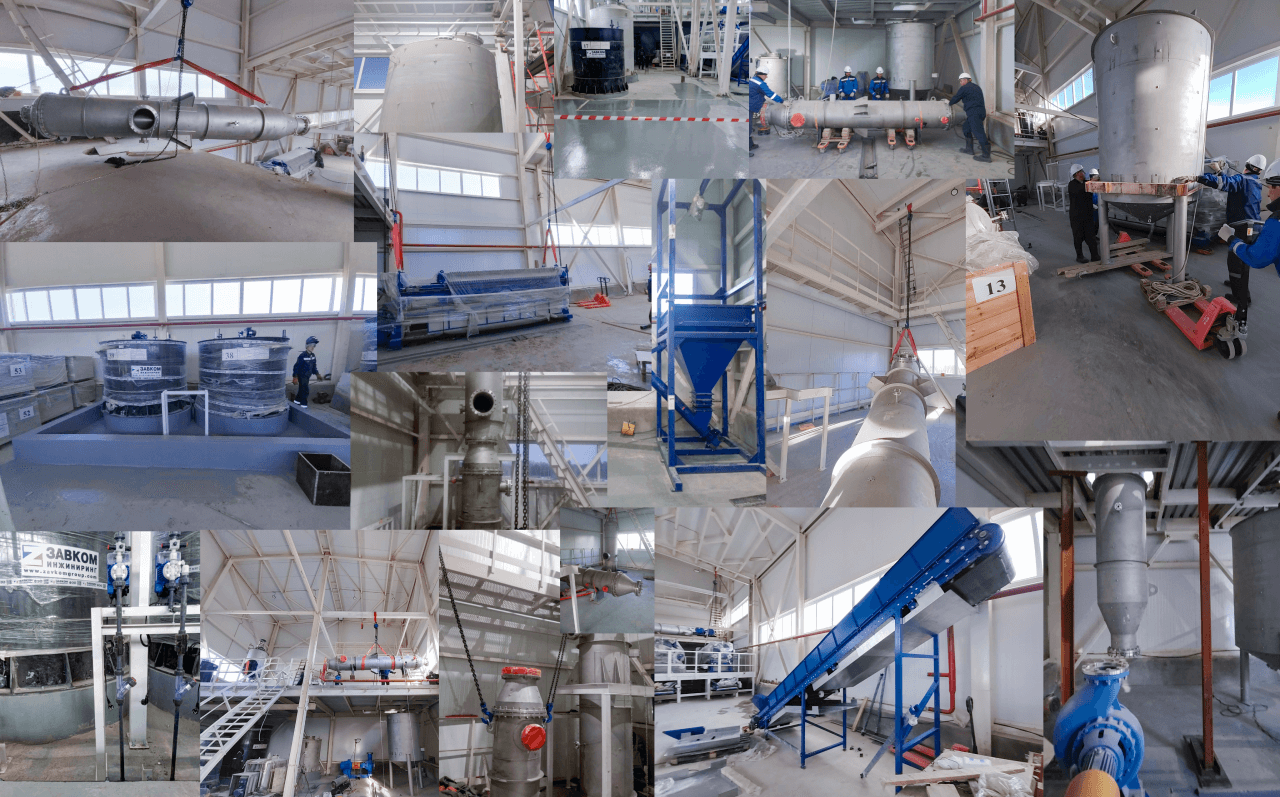
Reverse osmosis
Reverse osmosis - the process of separating a solution into pure water and concentrate through a semi-permeable membrane under pressure exceeding osmotic.
Principle
Osmosis causes water to move into a more concentrated solution. If you apply external pressure higher than osmotic pressure, the flow will reverse: water molecules pass through the membrane, and salts and organic substances remain in the concentrate. The operating pressure depends on the salt content: for brackish waters it is usually 10–30 bar, for sea water it is 50–80 bar.
Where is it used?
- water treatment for boilers and steam generators;
- desalination of process water;
- concentration of wastewater and return of water to production;
- obtaining water for high-purity technologies.
Key Limitations
Membranes are sensitive to contamination, sedimentation and chlorine, so preliminary mechanical and sorption cleaning, hardness stabilization and protection with antioxidants are necessary. The concentrate requires separate disposal - this determines the economics of the installation.
Watch projects