
Filtration
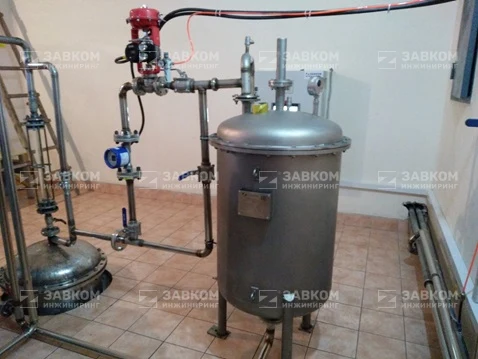
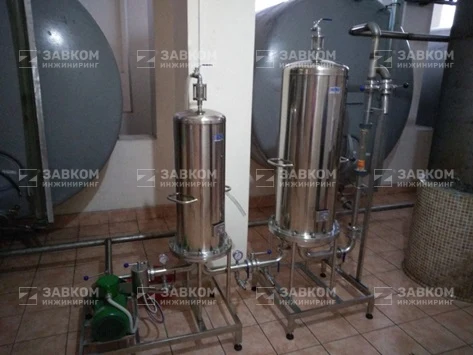
Filtration - separation of suspensions and turbid liquids when passing through a porous partition that retains solid particles. In biotechnological production, this is a key clarification, sterilization and fine cleaning operation.
Separation mechanism
The flow passes through the partition under the influence of a pressure difference. Particles are retained in the thickness of the material or on its surface, and the purified liquid is removed. As sediment accumulates, the pores become clogged, resistance increases, and the partition is washed or replaced.
Types of filtering
The method is selected according to the particle size and the required purification fineness.
- depth filtration - retention of particles in the thickness of the fibrous packing;
- surface filtration - deposition of a layer of sediment on the membrane;
- alluvial filtration - the use of an auxiliary powder layer;
- membrane filtration - separation by molecular size.
Parameters and Application
The speed, pressure drop and temperature are adjusted to the viscosity of the medium and the properties of the particles. Too much pressure compacts the sludge and reduces throughput. In biotechnology, filtration clarifies wort, separates yeast, stabilizes drinks, and prepares water and air for sterile stages.

Видеообзор
Watch projects


